
Your Complete Septic Partner
Septic System Design & Installation | Kawartha Lakes & East-Central Ontario
A New Septic System Is a Big Decision. We Make It a Clear One.
Whether you're building a new home, replacing a failed system, or upgrading an aging one — a septic installation is one of the biggest investments you'll make in your property. We get that it can feel overwhelming. The cost is significant, the terminology is unfamiliar, and the stakes are high. That's exactly why we handle everything under one roof — design, permitting, installation, and final inspection — so you have one team, one point of contact, and a clear path from start to finish.
Imrie Septic — Your Complete Septic Partner
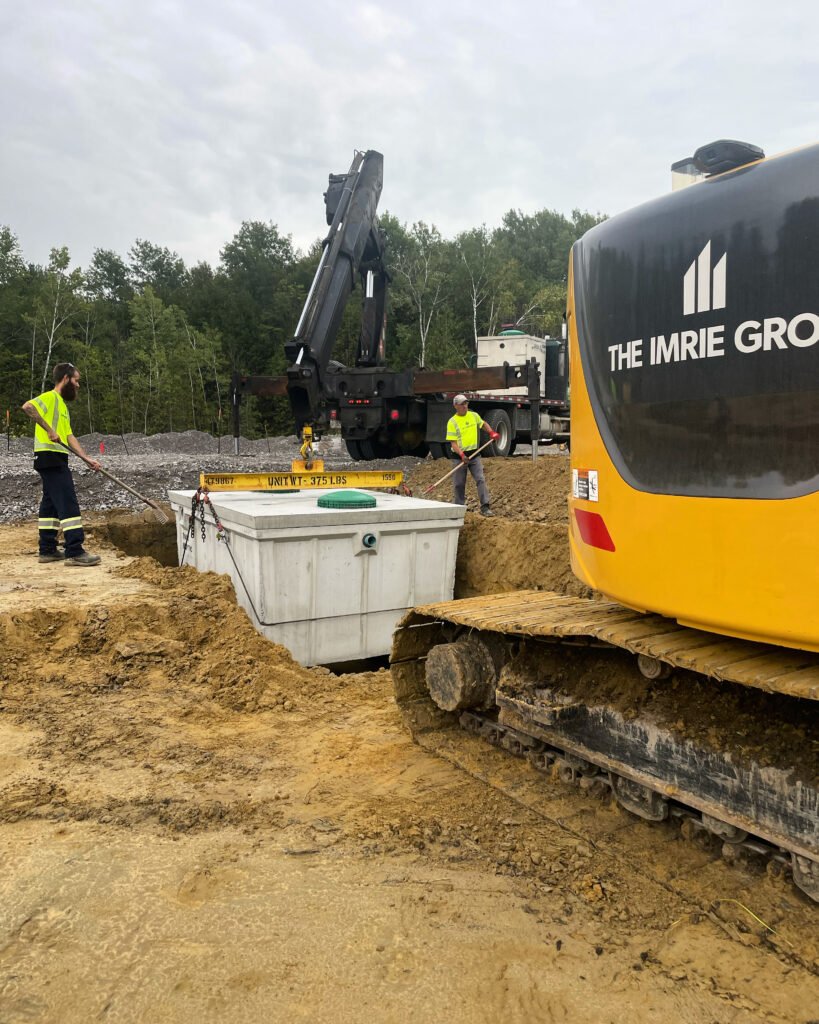
You're Here Because Something Changed
Most homeowners don’t think about septic system installation until they have to. Something triggers the conversation — and once it starts, the questions come fast. Here are the most common reasons people call us:
Failed System
Your existing system has failed or is failing — sewage backing up, ponding in the yard, or contamination showing up in well water tests. You need a replacement, and you need it done right.
New Home Build
You’re building a new home or cottage in the Kawartha Lakes region and need a septic system designed and installed before you can occupy. The system has to be right for your lot, your soil, and your household size.
System Upgrade
You’re adding bedrooms, bathrooms, or living space and your current system can’t handle the increased flow. The Ontario Building Code requires your system to match the home’s capacity — not just how you’re using it today.
Real Estate Transaction
You’ve bought a property — or you’re selling one — and the septic system is part of the deal. Systems don’t need to meet current code to close a transaction, but they do need to be in working order. If an inspection reveals a failed or failing system, it’s often written into the agreement that a repair or replacement is included as part of the sale. Either way, you need a clear answer on what the system needs.
Every Property Is Different; Your System Should Be Too.
There’s no one-size-fits-all septic system. Under the Ontario Building Code (Part 8), the size and type of system you need is determined by a combination of factors specific to your property. That’s why a proper site evaluation is always the first step — and why cookie-cutter quotes from companies who haven’t visited your property should raise a red flag.
The Factors That Shape Your System Design
Factor 1: Number of Bedrooms The OBC calculates your daily sewage flow based on the number of bedrooms in your home — not the number of bathrooms or current occupants. Each bedroom assumes two people at 275 litres per day. A 3-bedroom home has a daily design flow of approximately 1,650 litres. A 5-bedroom home: 2,500 litres. More flow means a larger system.
Factor 2: Soil Conditions Your soil determines how quickly treated effluent can be absorbed. Sandy, well- draining soils allow for smaller, simpler systems. Heavy clay soils, high water tables, or shallow bedrock require larger systems, raised beds, or advanced treatment — all of which increase cost and complexity.
Factor 3: Available Space Septic systems need room — and they need to maintain minimum separation distances from your well, property lines, water bodies, structures, and trees. On a large rural lot, this is rarely an issue. On a tight waterfront property, it can dictate everything about your system design.
Factor 4: Site Slope and Access A flat lot with easy machine access is simpler to work. Steep grades, narrow driveways, rock outcroppings, or limited staging area all affect the installation approach and cost.
System Types at a Glance
Raised Filter Bed (Level I): Our most common installation. Two-compartment septic tank with effluent filter, gravity-fed to a raised sand filter bed. Reliable, minimal moving parts, and proven for decades. Best for properties with adequate space and where we can use gravity.
Level IV Treatment Unit + Dispersal: Required for smaller lots, poor soils, or proximity to sensitive water. Advanced treatment in a tank (Bionest, Waterloo Biofilter) reduces the dispersal footprint dramatically — from 500+ sq m down to as little as 89 sq m with a shallow buried trench. More complex, but sometimes the only option that fits.
Not sure which system your property needs? That’s what the site evaluation is for.
We Design Systems That Work for Decades — Not Just to Pass Inspection
Too many septic designers start with lowering capital price as the ultimate objective. We don’t. We start with robust, reliable performance. A septic system is essential underground infrastructure — unsexy, often forgotten the day it’s installed, and absolutely critical when it isn’t working. The Ontario Building Code designs to peak flow — not average flow — because most systems are installed and forgotten until they fail. Our job is to design and build something that serves you, protects the environment, and keeps this place beautiful for generations. Not just something that passes inspection.
One Team, Start to Finish
We design and install under the same roof — with 35 years of experience informing every design decision. Our team holds both design and installation licences under the Ontario Building Code, which means one team accountable for the entire outcome from site evaluation through final inspection. No finger-pointing between designer and installer. When we occasionally bring in a third-party designer, they’re vetted and we work closely with them to ensure our standards — which often exceed OBC guidelines — are represented in the design. We’re not just designing for compliance. We’re designing a robust solution.
Simple by Design
We use gravity instead of pumps wherever possible. We choose proven technologies with the fewest failure points. Fewer moving parts means fewer things that can break, lower long-term maintenance costs, and a system that runs reliably for decades. Simple when possible — redundant when complexity is necessary. When a pump is required, we recommend duplex systems with two alternating pumps so the system keeps running even if one fails. We’re building essential underground infrastructure that most people forget about the day after it’s installed. That’s the point — a well-designed system shouldn’t demand your attention.
Treatment Where You Can See It
When a Level IV treatment system is required, we prefer technologies that treat effluent in the tank — such as Bionest and Waterloo Biofilter — rather than systems that rely on treatment in the leaching field itself. Why? Tank-based treatment is easier to verify through sampling, and easier to repair when something needs attention. You don’t have to dig up your yard to fix a problem. Your underground infrastructure stays undisturbed.
From First Call to Finished System — Here's How It Works
A septic installation is a multi-step process governed by the Ontario Building Code. Here’s what to expect when you work with us:
Step 1: Tell Us About Your Property Fill out our Residential Property Information Form (below) or call us directly. We’ll ask about your home’s size, bedroom count, fixtures, well type, and what’s prompting the project. This gives us what we need to start evaluating your situation and provide a preliminary scope.
Step 2: Site Evaluation & Test Pits We visit your property to assess soil conditions, slope, available space, well location, and setback distances. Test pits are dug to determine your soil’s percolation rate (how fast it absorbs water) — this is the single most important factor in your system design. We charge separately for this discovery phase because it’s real work that produces real data.
Step 3: System Design & Proposal Based on the site evaluation, we design a system that meets OBC requirements and fits your property. Our initial proposal is typically based on a conventional system — the most cost-effective starting point. If test results reveal that a conventional system won’t work for your site, we’ll explain why and present a revised design with a Level IV treatment system before proceeding. Either way, you’ll receive a detailed proposal with a ceiling price so you can budget with confidence.
Step 4: Permitting We submit the design to your local regulatory authority (municipality, health unit, and/or conservation authority) for review and approval. We handle the paperwork and navigate the process for you.
Step 5: Installation Once permitted, we schedule and complete the installation — excavation, tank placement, distribution system, backfill, and grading. For replacement systems, we can often fast-track through permitting and prioritize scheduling — meaning a working system in as little as 4 weeks. New builds work within your construction timeline, which can span months.
Step 6: Final Inspection & Handover Your local authority inspects the completed installation to confirm it meets code. Once approved, we walk you through your new system — what it is, how it works, and how to maintain it. You’ll receive all documentation, as-built drawings, and maintenance guidelines. For conventional systems, your first year of maintenance is included at no charge — annual effluent filter cleaning, core sampling, and a system health check to make sure everything is performing as designed.
Ready to start?
Honest Pricing. No Surprises. No Shortcuts.
We believe you should understand what drives the cost of your septic system before you commit. A septic installation isn’t a product you buy off the shelf — it’s a custom solution designed for your specific property. Two identical homes on different lots can require completely different systems at completely different price points. Here’s what to realistically expect:
3-bedroom home, good soil, adequate space
$17,000 – $22,000
3-bedroom home, challenging soil or tight lot
$25,000 – $35,000
Complex site (Level IV treatment + engineered dispersal)
$35,000 – $50,000+
Site evaluation & design (charged separately)
Call for details
The biggest factor in cost is your soil. Sandy, well-draining soil allows for a conventional raised filter bed — our most common and cost-effective installation. Clay soil, high water tables, shallow bedrock, or tight lot constraints may require a Level IV treatment system with engineered dispersal, which is significantly more complex and more expensive.
We give you a worst-case budget before you commit. Our initial proposal is typically based on a conventional system — the simplest and most cost-effective option for your property. In some cases, the discovery phase reveals that a conventional system won’t fit your lot, and a Level IV treatment system is required. When that happens, costs increase — and we’ll tell you clearly before any work proceeds. Once the system type is confirmed, your proposal will include a ceiling price. In many cases, the final cost comes in under that number. But you’ll never be blindsided by an invoice you didn’t see coming.
Terms & Conditions: All pricing is subject to site conditions, permitting requirements, and current material costs. Design and site evaluation fees are charged separately and are not refundable if the project doesn’t proceed — this is real professional work that produces data you own regardless.
Start Your Project — Tell Us About Your Property
Fill out the form below and we’ll get back to you to discuss your project and next steps. The more detail you can provide, the better we can assess your situation upfront.
Prefer to Download?
If you’d rather fill out the form offline, you can download our Residential Property Information Form as a PDF and email it back to us with any existing septic drawings or sketches you have.
Email completed forms to info@imriegroup.ca or bring them to our office at 2195 County Road 46, Woodville.
How much does a new septic system cost in Ontario?
It depends entirely on your property’s soil conditions, lot size, and the type of system required. For a typical 3-bedroom home on well-draining soil with adequate space, expect $17,000-$22,000 for a conventional raised filter bed. If your site has challenging soil, a high water table, or limited space requiring a Level IV treatment system, costs can range from $25,000-$50,000+. Our initial proposal is usually based on a conventional system. In some cases, the discovery phase — test pits and soil evaluation — reveals that a conventional system won’t fit and a treatment system is required, which increases the cost. We’ll always tell you before any work proceeds. Once the system type is confirmed, you’ll have a ceiling price you can plan around.
How long does a septic installation take?
The timeline depends on whether it’s a replacement or new build. For a replacement system on an existing property, we can often fast-track through permitting and have a working system installed within 4 weeks. New home builds typically work within your construction timeline — from site evaluation through installation can span several months depending on permitting, weather, and scheduling. The actual installation work on-site is usually completed within 3-5 days for a conventional system.
Do you handle the design and installation, or just one or the other?
Both. Our team holds design and installation licences under the Ontario Building Code. We handle everything under one roof — site evaluation, test pits, system design, permitting, installation, and final inspection. One team, start to finish, fully accountable for the outcome. If you prefer to use an independent designer and get multiple installation quotes, we can work with outside designs as well.
What's the difference between a Level I and Level IV system?
A Level I system (conventional) uses a septic tank and a leaching bed — like a raised filter bed or absorption trenches — where the soil does most of the treatment. This is the simplest and most cost-effective option where soil and space allow. A Level IV system adds an advanced treatment unit (like Bionest or Waterloo Biofilter) that further treats the effluent before it reaches the dispersal field. This allows for a much smaller dispersal area. Level IV systems are required when lot size, soil conditions, or proximity to sensitive water make a conventional system impractical.
Why do soil conditions affect the cost so much?
Because your soil determines the type and size of the system you need. Sandy, well-draining soil absorbs treated effluent efficiently, which means a simpler, smaller system. Heavy clay, high water tables, or shallow bedrock can’t absorb effluent the same way — so the system needs to compensate with advanced treatment, raised beds, or engineered dispersal. These require more materials, more labour, more engineering, and more specialized equipment. Two identical homes on different lots can have dramatically different system costs for this reason alone.
Do I need a permit to install a septic system?
Yes. All septic system installations, replacements, and upgrades in Ontario require a permit under the Building Code Act. The permit is issued by your local regulatory authority — which could be your municipality, health unit, and/or conservation authority depending on where you live. We handle the permitting process for you, including submitting the design for review and scheduling inspections.
What happens to my yard during installation?
A septic installation involves excavation — there’s no way around that. We’ll need to dig test pits during the site evaluation, then excavate for the tank, distribution piping, and leaching bed during installation. We restore the site after completion, including backfill and grading. Your yard will need time to recover — expect some settling and re-seeding. We’ll walk you through what to expect for your specific situation so there are no surprises.
What kind of maintenance does a new septic system need?
All septic systems benefit from regular professional maintenance. For conventional systems, we recommend annual effluent filter cleaning, core sampling to monitor sludge and scum levels, and visual checks that indicate overall system health. These aren’t legally required — but they catch small problems before they become expensive ones. For Level IV treatment systems, maintenance is mandatory under the Ontario Building Code — you’re legally required to maintain a service agreement with an authorized representative of the system manufacturer, including regular inspections and effluent sampling. For new conventional installations, we include the first year of maintenance at no charge so your system gets the right start.
Related Services
Septic Tank Pumping
Regular pumping protects your system and extends its life. Whether you have a new installation or an existing system, we recommend pumping every 3-5 years.
Septic Inspections
Buying a property? Need a professional assessment of your current system? Our inspections give you a clear, honest picture of what you’re working with.
Maintenance Plans
Every septic system benefits from regular professional maintenance. We offer annual service including effluent filter cleaning, core sampling, and system health checks. First year free on new conventional installations
Ready to Start Your Septic Project?
Fill out our Property Information Form and we’ll be in touch to discuss your project. Or call us directly — we’re happy to answer questions before you commit to anything.
Imrie Septic — Your Complete Septic Partner